Construction sites, road maintenance zones, logistics areas, and other high-risk workplaces require workwear that can withstand daily wear while keeping workers visible. As sustainability becomes increasingly important, recycled polyester is now used in more high-visibility shirts, T-shirts, vests, jackets, and trousers.
But is recycled Hi-Vis fabric durable enough for demanding construction and road safety applications?
Yes, when the fabric and finished garment are properly engineered and tested. Recycled polyester does not automatically mean lower durability. The actual service life depends on fabric construction, yarn quality, garment design, reflective materials, seams, finishing, washing, and the working environment.
Construction and road workers can expose garments to repeated friction, stretching, dirt, rain, sunlight, machinery, and frequent washing. Durability therefore involves more than fiber strength.
Important factors include:
Abrasion resistance
Tear and tensile strength
Color retention
Dimensional stability
Seam strength
Reflective tape durability
Washing performance
Weather resistance
ASTM D4966 provides a standardized method for evaluating textile abrasion resistance using the Martindale abrasion tester. However, laboratory abrasion results should be considered together with other garment properties when assessing real-world durability.
For buyers, this means the recycled or virgin origin of polyester should not be used as the only measure of garment durability.
Recycled polyester can be manufactured into durable woven and knitted fabrics for professional workwear. Its performance depends on how the recycled material is processed into fibers and yarns and how those yarns are converted into the finished fabric.
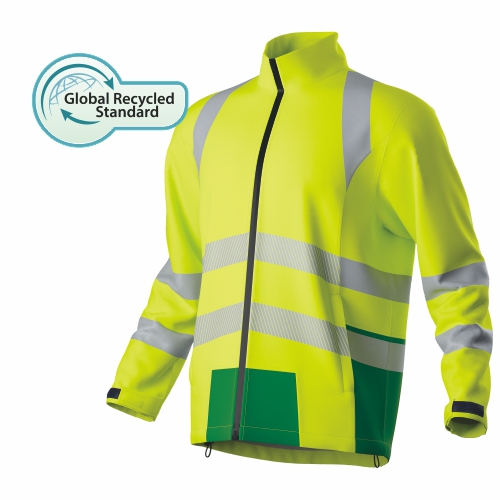
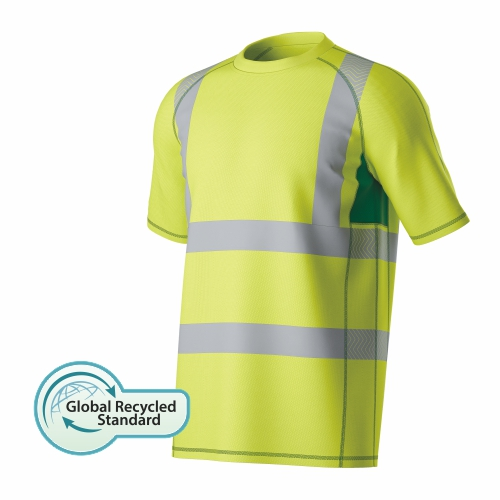
Kachun's recycled workwear range covers T-shirts, polo shirts, safety vests, softshell jackets, waterproof jackets, bodywarmers, and trousers, demonstrating that recycled polyester can be used across different workwear applications.
The Global Recycled Standard also provides requirements for recycled-material content and supply-chain traceability, helping buyers verify recycled claims.
However, certification of recycled content should not be confused with a guarantee of physical durability. Buyers should still evaluate the finished garment and its applicable test results.
Shirts and polo shirts face different challenges from heavy outerwear. They are often used in warm conditions where breathability, moisture management, lightweight construction, and freedom of movement are important.
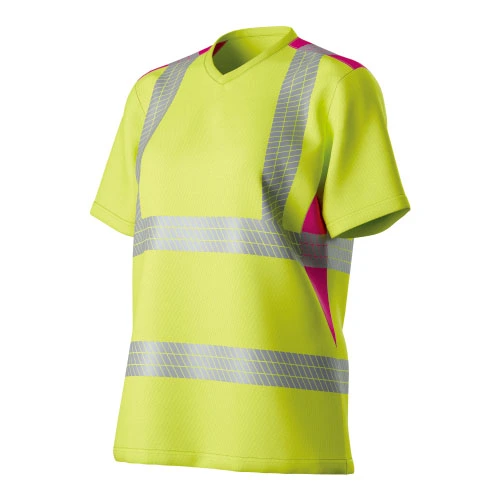
Kachun's recycled collection includes birdseye T-shirts and recycled two-tone polo shirts. For buyers sourcing Hi-Vis T shirts wholesale, these lightweight constructions can provide a practical option for large workwear programs.
Wicking birdseye fabric is particularly relevant for warm-weather workwear because its knitted structure can support airflow and moisture management.
When comparing two tone polo work shirts, buyers should check:
Fabric weight
Moisture-wicking performance
Air permeability
Stretch
Color fastness
Reflective tape attachment
Washing durability
Seam quality
A recycled polo shirt still needs to maintain its shape, color, visibility, and structural integrity after repeated use and laundering.
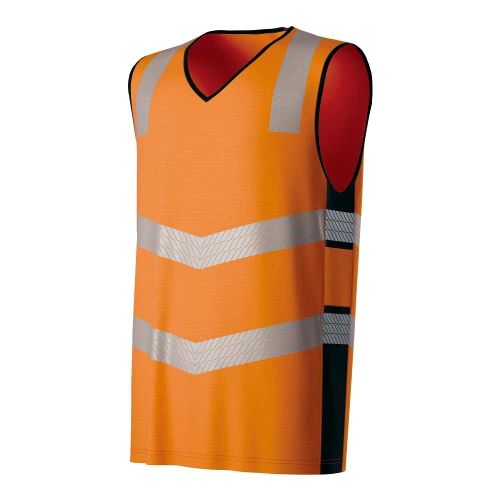
Safety vests provide a lightweight way to increase worker visibility and can be worn over shirts or other uniforms.
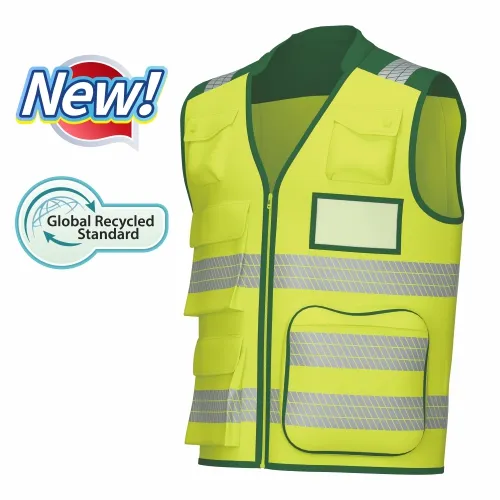
Kachun's HI-VIS Recycled Tricot Safety Vest uses 100% recycled polyester wrap knit and includes chest and waist pockets, along with mesh inserts for breathability and stretch. The product is specified to EN ISO 20471 Class 2, ANSI/ISEA-107 Type R/Class 2, and GRS.
For construction workers, pocket and seam construction can be especially important because repeated carrying of tools, phones, identification cards, or small equipment can create localized stress.
A durable vest therefore requires both suitable fabric and appropriate garment construction.
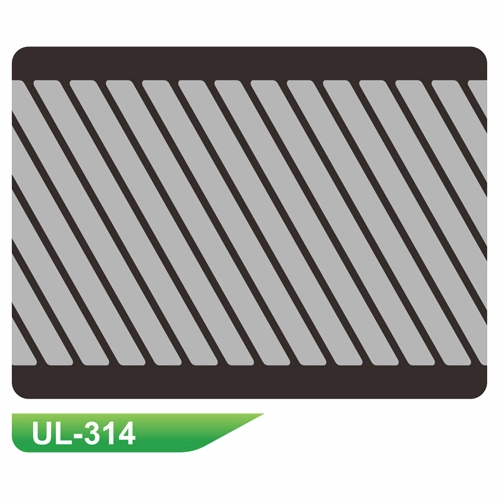
The background fabric is only one component of high-visibility clothing. Reflective tape must also remain functional after movement, folding, washing, and exposure to dirt.
Kachun's workwear product range includes different reflective tape solutions for high-visibility garments.
For buyers evaluating Hi-Vis clothing tape, important considerations include:
Reflective performance
Attachment method
Washing resistance
Flexibility
Compatibility with the base fabric
Placement on the garment
ISO 20471 establishes requirements for high-visibility clothing, including fluorescent material, retroreflective material, minimum areas, and placement.
Therefore, changing from virgin polyester to recycled polyester does not reduce the requirements for the reflective components of the finished garment.
Jackets are exposed to some of the most demanding conditions in outdoor work.
A Hi-Vis softshell jacket with hood may need to provide wind resistance, water resistance, breathability, warmth, and freedom of movement. A waterproof winter jacket may additionally require taped seams, waterproof zippers, insulation, and a protective hood.
Kachun's recycled high-performance softshell jacket uses recycled polyester shell fabric, polyester fleece, and a waterproof and breathable TPU membrane. Its construction is designed for weather protection while maintaining breathability and warmth.
Kachun's recycled waterproof winter jacket uses recycled polyester woven pongee with a three-layer waterproof and breathable TPU membrane, taped seams, insulation, waterproof zippers, a detachable hood, and segmented reflective tape.
These examples demonstrate that recycled polyester can be used in technical outerwear rather than only lightweight clothing.
For an oxford waterproof shell jacket, buyers should similarly evaluate the complete fabric system. Oxford polyester alone does not define waterproof performance.
Trousers experience different forms of mechanical stress. Workers may kneel, crouch, climb, sit, and move across rough surfaces, creating additional wear around knees, pockets, seams, and lower legs.
Kachun's recycled range includes waterproof two-tone rain trousers designed to complement its recycled outerwear.
For two tone Hi-Vis trousers, buyers should consider:
Area | Key Consideration |
Fabric | Weight, construction and abrasion resistance |
Knees | Mobility and reinforcement |
Seams | Stitching and stress resistance |
Reflective tape | Placement and durability |
Waterproofing | Fabric and seam performance |
Fit | Freedom of movement |
Washing | Color and dimensional stability |
The right specification depends on whether the trousers are designed primarily for rain protection, high visibility, summer comfort, or all-weather use.
Different work environments create different durability requirements.
Application | Main Challenge | Important Feature |
Construction | Abrasion and mechanical wear | Durable fabric and seams |
Road work | Visibility and weather | Reflective materials and protection |
Traffic management | Conspicuity | High-visibility configuration |
Outdoor maintenance | Rain, dirt and UV | Weather-resistant construction |
Logistics | Movement and washing | Lightweight durable fabric |
ANSI/ISEA 107 specifies requirements for the design, testing, performance, and labeling of high-visibility safety apparel in the relevant market.
This highlights an important point: durable fabric alone does not make a compliant safety garment. The entire garment must be appropriately designed and tested.
Several factors influence how long recycled hi-vis workwear remains functional.
Fabric density, yarn quality, weight, and construction influence abrasion resistance and dimensional stability.
Reinforced seams, appropriate pocket placement, secure closures, and suitable fit can reduce stress during movement.
Reflective tape needs to remain securely attached and maintain its required performance throughout the garment's service life.
Frequent washing can affect color, dimensions, fabric strength, and reflective components. Industrial workwear buyers should follow the manufacturer's recommended care procedures.
Mud, dust, sunlight, rain, machinery, sharp surfaces, and repeated friction can all affect garment life.
Consequently, there is no universal answer that recycled polyester is either more or less durable than virgin polyester. The specific fabric and garment must be evaluated for its intended application.
Before placing a large order, buyers should request appropriate technical information and test documentation.
A practical evaluation can include:
Fabric composition
Abrasion resistance
Tensile or tear performance where applicable
Colorfastness
Dimensional stability
Reflective performance
High-visibility compliance
Washing durability
Waterproof performance for rainwear
Breathability for technical garments
For jackets and trousers, waterproof and breathability testing should be considered alongside mechanical durability. For shirts and vests, moisture management, color retention, reflective tape, and washing performance may be more important.
Yes. One of the advantages of recycled polyester is its flexibility across different workwear categories.
A summer construction uniform could combine a recycled birdseye T-shirt or long sleeve Hi-Vis polo with a lightweight safety vest. In cooler weather, workers could add a Hi-Vis soft shell vest or softshell jacket. Waterproof jackets and trousers can provide additional protection during heavy rain.
Kachun's recycled product collection covers multiple categories, including shirts, vests, jackets, bodywarmers, and trousers.
This allows buyers to develop a coordinated recycled workwear program rather than using recycled fabric for only one product.
Yes. Properly engineered recycled polyester can provide strong durability for construction applications. The finished garment's fabric construction, seams, design, and testing are more important than recycled content alone.
Yes. Recycled polyester can be used for road-safety garments when the finished product meets the applicable high-visibility and performance requirements.
Not necessarily. Durability depends on fiber quality, yarn construction, fabric density, finishing, garment design, and working conditions.
Yes. Recycled polyester can be combined with fleece and waterproof breathable membranes to create technical softshell workwear.
Yes. Recycled polyester can be used in lightweight birdseye T-shirts and polo shirts designed for breathable workwear applications.
Ask for fabric specifications, abrasion and strength data where applicable, high-visibility certification, reflective-material information, washing performance, and product-specific test reports.
Recycled Hi-Vis fabric can be durable enough for construction and road safety use when it is properly engineered, manufactured, and tested.
The recycled origin of polyester does not automatically determine durability. Fabric construction, yarn quality, garment design, reflective tape, seam quality, washing resistance, and working conditions have a greater influence on practical service life.
For construction, abrasion resistance and robust construction may be the priority. For road safety, visibility, reflective performance, weather resistance, and garment coverage are equally important.
The advantage of recycled polyester is that it can be applied across an entire workwear system. T-shirts and polo shirts can support lightweight summer workwear, vests can provide flexible visibility, softshell jackets can offer weather protection, and waterproof jackets and trousers can provide all-weather coverage.
For buyers, the key question is therefore not simply whether recycled fabric is durable. It is whether the specific recycled fabric and finished garment have been designed and tested for the demands of the intended workplace.
 English
 日本語
日本語 français
 português
 Deutsch
 dansk
dansk Suomi
Suomi Español
 Nederland
 norsk
norsk