Sustainable workwear is becoming increasingly important for companies that need to balance worker safety, product performance, and environmental responsibility. For buyers sourcing HI-VIS workwear china, recycled polyester has become an attractive material option for high-visibility jackets, shirts, vests, and other protective apparel.
However, choosing recycled fabric alone is not enough. Buyers should also evaluate recycled-content certification, visibility performance, reflective materials, weather protection, breathability, comfort, durability, and applicable safety standards.
Kachun's recycled workwear collection includes high-visibility shirts, vests, jackets, softshell garments, waterproof outerwear, and trousers. This allows buyers to develop coordinated workwear programs using recycled polyester while selecting different garment designs according to working conditions.
GRS, or the Global Recycled Standard, is an international certification developed by Textile Exchange. It verifies recycled content and tracks certified materials through the supply chain using chain-of-custody requirements.
GRS also includes requirements covering social, environmental, chemical, and labeling practices. Products seeking GRS certification must meet the applicable recycled-content threshold and supply-chain requirements.
For high-visibility workwear buyers, this provides an important distinction between simply claiming that a fabric contains recycled polyester and using certified recycled material with documented traceability.
Kachun's company information lists GRS certification together with ISO 9001, ISO 14001, and ISO 45001 certifications, supporting its focus on quality management, environmental management, and occupational health and safety.
Recycled polyethylene terephthalate, commonly known as rPET, can be produced from recycled PET materials and converted into polyester fibers for textile manufacturing.
Kachun describes a recycling process in which used bottles are collected, processed, melted, and converted into recycled polyester fibers.
The resulting recycled polyester can then be used in different high-visibility garment structures. Depending on the application, it can be engineered into lightweight polo shirts, durable vests, waterproof jackets, softshell outerwear, and insulated garments.
This is particularly useful for companies that want to introduce recycled materials across an entire workwear program rather than limiting sustainable sourcing to one product category.
Buying Factor | What to Check | Why It Matters |
Recycled content | GRS certification and traceability | Supports credible recycled-material claims |
Visibility | Fluorescent fabric and reflective tape | Improves worker conspicuity |
Jacket construction | Waterproof, breathable or insulated layers | Determines outdoor protection |
Shirt construction | Moisture management and ventilation | Improves warm-weather comfort |
Vest construction | Lightweight design and pocket configuration | Useful for layered workwear |
Reflective material | Tape type, placement and durability | Supports visibility performance |
Breathability | Mesh panels or breathable membranes | Helps manage heat and moisture |
Weather protection | Waterproof and wind-resistant construction | Important for outdoor work |
Compliance | EN ISO 20471 and other applicable standards | Supports market compliance |
Maintenance | Washing and durability requirements | Affects product service life |
Jackets should be one of the first considerations when developing a sustainable high-visibility workwear program because they need to perform across multiple environmental conditions.
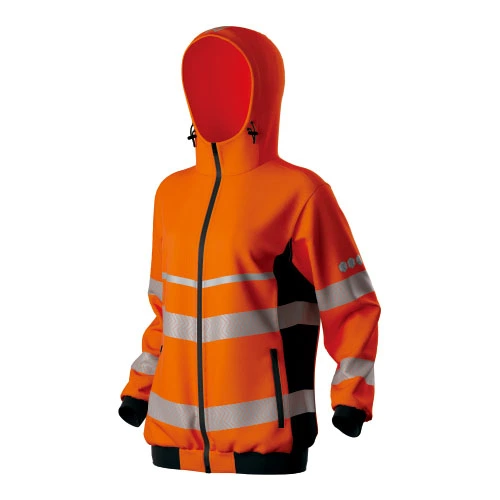
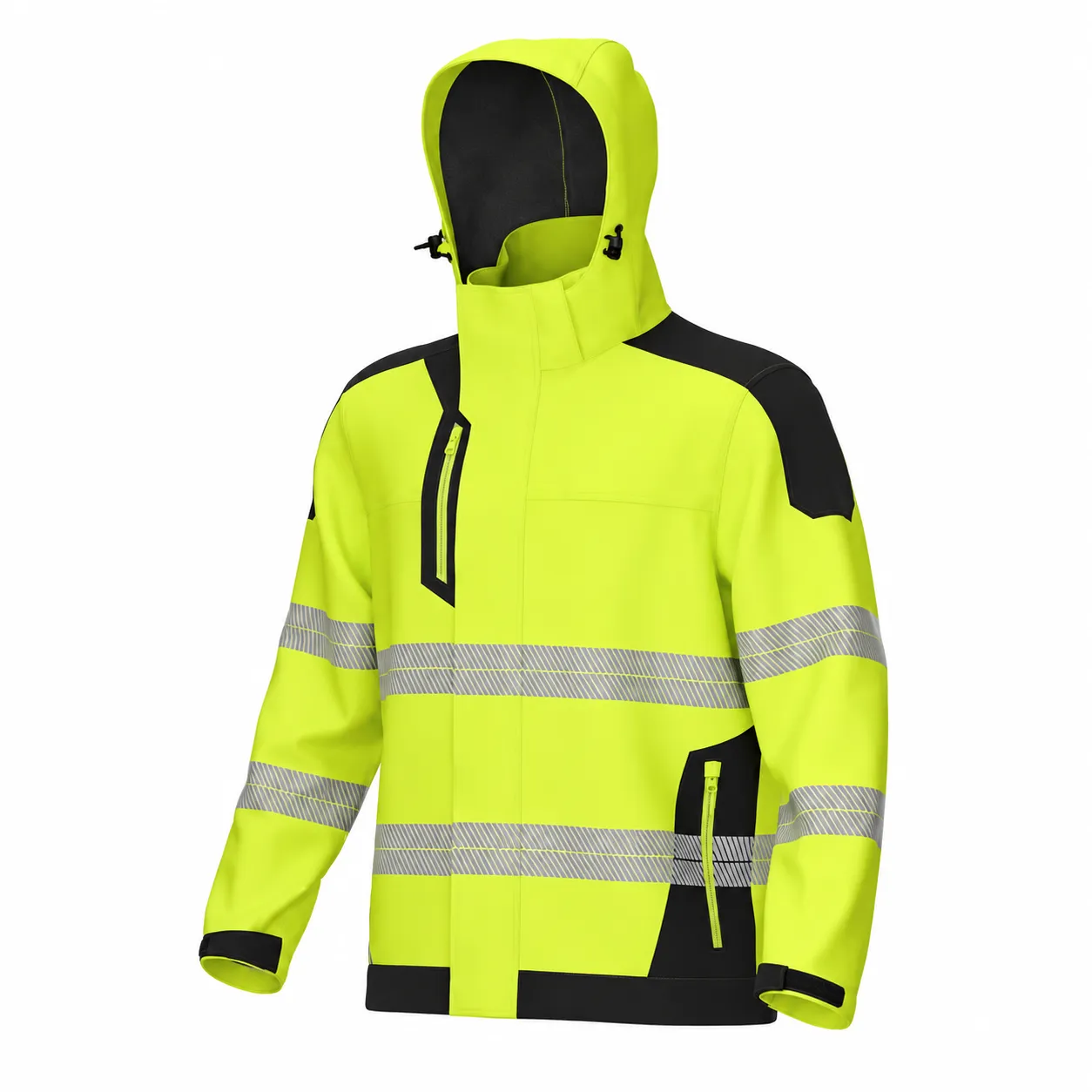
A high-quality recycled Hi-Vis jacket may need to combine fluorescent fabric, reflective tape, waterproof protection, breathability, wind resistance, thermal insulation, and freedom of movement.
Kachun's recycled collection includes several jacket designs, including recycled softshell jackets, waterproof parkas, insulated bodywarmers, and winter jackets.
Its recycled high-performance softshell jacket uses a three-layer construction incorporating recycled polyester, fleece, and a waterproof and breathable TPU membrane. The product is specified with EN ISO 20471 Class 3, ANSI/ISEA-107 Type R/Class 3, and GRS requirements.
This type of construction demonstrates how recycled polyester can be incorporated into a technical protective garment rather than being limited to basic work shirts.
For outdoor workers, a waterproof recycled jacket can provide another layer of protection against rain and wind. For colder environments, an insulated or quilt-lined design can add thermal protection.
Buyers should therefore select jacket construction according to the working environment:
Lightweight jackets: Suitable for transitional seasons and active work.
Softshell jackets: Suitable when flexibility, breathability, and weather resistance are required.
Waterproof jackets: Designed for outdoor work in wet conditions, like pink Hi-Vis waterproof jacket.
Insulated jackets: Suitable for cold-weather applications.
2-in-1 jackets: Useful when workers need adaptable protection across changing temperatures.
While jackets provide the primary outer layer in many outdoor applications, shirts are essential for daily high-visibility workwear.
Recycled polyester is particularly suitable for high-visibility shirts because it can be engineered for lightweight construction, moisture management, ventilation, and quick drying.
Kachun's recycled shirt range includes high-visibility polo shirts and two-tone designs made from recycled polyester fabrics. Some designs combine bird-eye knit construction with reflective tape and are specified according to EN ISO 20471 and ANSI/ISEA-107 requirements.
For buyers searching for HI-VIS polo shirts with reflective tape, the key considerations should include:
Fluorescent fabric area
Reflective tape configuration
Moisture-wicking performance
Breathability
Fabric weight
Collar and neckline construction
Sleeve length
Washing durability
A long sleeve HI-VIS polo can provide greater arm coverage for outdoor work, while short-sleeve designs may be preferable in hot working environments.
The HI-VIS v neck design is another option when workers need a lightweight garment with an easy-to-wear neckline. Buyers should select the neckline, sleeve length, and fabric weight according to the work environment rather than appearance alone.
High-visibility vests are useful when workers need a lightweight visibility layer over existing uniforms, shirts, or jackets.
A recycled Hi-Vis vest can provide an economical way to introduce sustainable materials without requiring a complete change to an existing workwear system.
Kachun offers recycled high-visibility vest designs using recycled polyester fabrics and reflective materials. Depending on the design, features can include reflective tape, contrast panels, pockets, front closures, and different visibility configurations.
When comparing recycled vests, buyers should evaluate:
Recycled content certification
Fluorescent background material
Reflective tape configuration
Number and location of pockets
Front closure
Garment weight
Compatibility with jackets and shirts
Applicable visibility standard
For workers who frequently add or remove outer layers, a vest can provide a flexible visibility solution. It can also be combined with a recycled shirt during warmer weather or worn over a recycled jacket when additional visibility is needed.
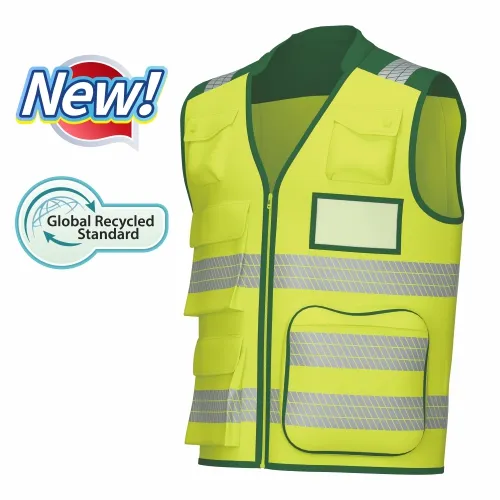
The fluorescent fabric is only one part of a high-visibility garment. Reflective materials are equally important because they help make workers more visible when illuminated by vehicle headlights or other light sources.
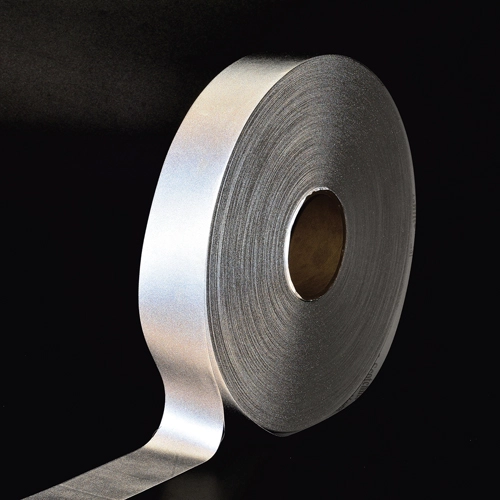
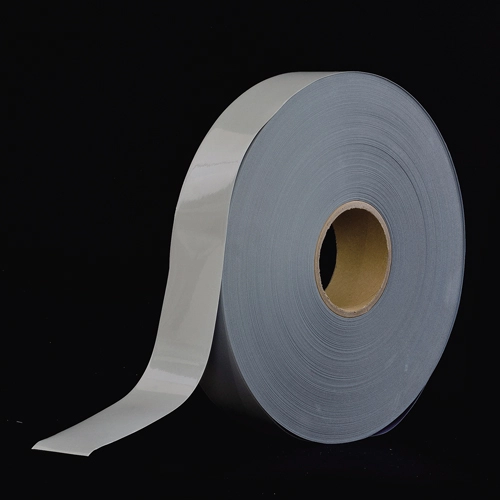
Kachun supplies reflective materials including sewing reflective tape and heat-transfer reflective tape. Different tape constructions can be developed for applications requiring flexibility, stretch, flame resistance, durability, industrial washing, or other functional characteristics.
This is particularly important when designing recycled jackets, shirts, and vests because reflective tape must work together with the garment structure.
For example, a polo shirt may require lightweight and flexible reflective tape, while a heavy-duty waterproof jacket may require reflective material capable of maintaining performance after repeated exposure to rain and washing.
Buyers searching for HI-VIS fabric tape should therefore confirm the intended garment application and required performance before selecting a tape.
GRS certification and high-visibility certification address different aspects of a garment.
GRS focuses on recycled content and supply-chain traceability, while high-visibility standards establish requirements for visibility garments.
For European markets, EN ISO 20471 is a major standard for high-visibility clothing. It specifies requirements for fluorescent and retroreflective materials, including minimum areas and placement.
ISO 13688 provides general requirements for protective clothing, including ergonomics, sizing, innocuousness, ageing, marking, and manufacturer information.
Therefore, buyers should not treat GRS certification as a substitute for protective-clothing certification. A recycled jacket, shirt, or vest may need to satisfy both sustainability requirements and the relevant safety requirements for its intended market.
Trousers remain useful as part of a complete high-visibility workwear system, particularly for workers exposed to rain or cold conditions.
When sourcing HI-VIS waterproof trousers, buyers should consider waterproof construction, breathability, reflective tape, mobility, waistband design, and compatibility with the selected jacket.
For colder applications, HI-VIS padded trousers can be paired with insulated jackets to create a coordinated winter workwear system.
However, trousers should be selected as part of the overall garment system rather than evaluated separately. The jacket, shirt, vest, and trousers should provide compatible visibility coverage and practical performance.
Sustainability should also be considered from a product-life perspective. A garment that cannot withstand its intended washing and working conditions may need to be replaced more frequently.
ISO 15797 provides procedures for evaluating workwear intended for industrial laundering, including properties such as dimensional stability, color characteristics, pilling, seam appearance, and overall appearance.
For professional workwear buyers, it is therefore important to ask manufacturers for washing recommendations and relevant test results.
This is especially important for high-visibility jackets and shirts because repeated washing can affect both fluorescent fabric appearance and reflective-material performance.
When sourcing HI-VIS workwear China, price should not be the only selection criterion.
A qualified manufacturer should be able to provide material information, certification documents, garment testing, reflective-material options, OEM/ODM development, and consistent production quality.
Kachun has more than 30 years of experience in protective garment and reflective-material manufacturing and provides OEM/ODM services. Its product range covers recycled shirts, vests, jackets, softshell garments, waterproof outerwear, and other protective workwear.
This broad product range can be useful for companies seeking a single supplier for a complete recycled high-visibility workwear program.
Before placing an order, buyers should confirm:
Is the recycled material supported by valid GRS documentation?
What percentage of recycled material is used?
Which high-visibility standard applies to the target market?
Does the jacket provide the required waterproof, breathable, or thermal performance?
Is the shirt suitable for the expected temperature and activity level?
Does the vest provide sufficient visibility when worn over other clothing?
What type of reflective tape is used?
Can the reflective material withstand the intended washing process?
Can the supplier provide test reports and certification documents?
Is OEM/ODM customization available?
No. GRS addresses recycled content and supply-chain traceability, while EN ISO 20471 addresses high-visibility clothing performance. A garment may need to comply with both depending on the buyer's requirements.
Yes. Recycled polyester can be engineered into lightweight shirts as well as technical jackets. Kachun's recycled collection includes softshell, waterproof, insulated, and other high-visibility jacket designs.
A suitable jacket should combine certified recycled materials with the required visibility performance, reflective tape, weather protection, breathability, durability, and garment construction for the intended working environment.
Yes. Lightweight recycled polyester shirts can provide moisture management and breathability. Mesh or bird-eye knit structures can also support ventilation, depending on the garment design.
Reflective tapes complement fluorescent background materials by improving visibility when light is directed toward the wearer. Their width, placement, construction, and durability should be considered together with the garment design.
Yes. Depending on the design and required visibility classification, a vest can be used as an additional visibility layer. Buyers should ensure that the complete clothing combination does not interfere with the required visible fluorescent and reflective areas.
Kachun provides OEM/ODM services and offers different garment constructions and reflective-material solutions. Buyers can discuss requirements for recycled jackets, shirts, vests, reflective tape, colors, and other garment specifications.
GRS certified rPET fabric provides an effective foundation for developing more sustainable high-visibility safety apparel. However, successful product selection requires more than choosing recycled polyester.
For buyers sourcing HI-VIS workwear china, jackets should receive particular attention because they may need to combine visibility with waterproofing, breathability, insulation, wind resistance, and durability. Recycled shirts and vests can then provide lightweight solutions for warmer conditions or additional visibility layers.
By combining certified recycled materials with suitable reflective materials, garment construction, testing, and applicable protective-clothing standards, companies can build a high-visibility workwear program that supports both sustainability and worker safety.
 English
 日本語
日本語 français
 português
 Deutsch
 dansk
dansk Suomi
Suomi Español
 Nederland
 norsk
norsk