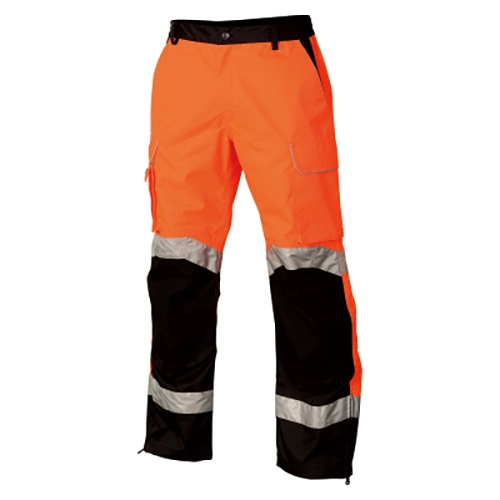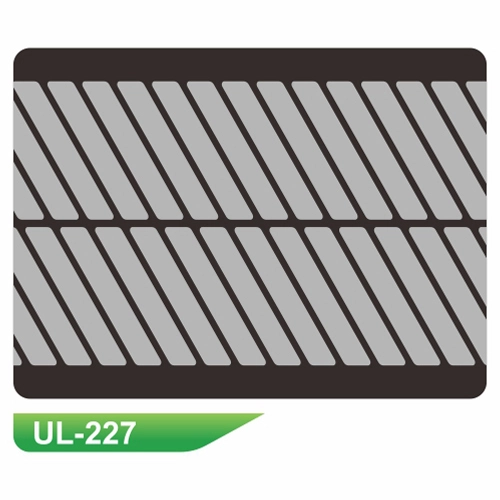
In heavy industries like oil and gas, electrical utilities, and petrochemical refining, occupational apparel must mitigate two distinct hazards simultaneously: low-light visibility and thermal exposure. While standards like NFPA 2112 dictate the performance of the body fabric, the trims—specifically the reflective stripping—must adhere to specialized compliance frameworks to prevent catastrophic failure during a flash fire or electric arc event.
Among these, the UL 209 standard remains one of the most critical testing and certification protocols for evaluating component materials used in protective clothing. This comprehensive guide breaks down the technical metrics of UL 209 reflective tape, its underlying physics, and how to deploy it effectively in industrial china workwear manufacturer supply chains.
Unlike standard decorative elements, industrial-grade reflective tape relies on retroreflection—the redirection of light rays back toward their original source (such as vehicle headlights) with minimal scattering.
The core metric used by UL (Underwriters Laboratories) and international bodies to quantify this performance is the Coefficient of Retroreflection ($R_A$). It measures the luminous intensity of the reflective material per unit area under specific entrance and observation angles, calculated using the following formula:
$$R_A = \frac{I}{E \cdot A}$$
Where:
$R_A$ is the coefficient of retroreflection, expressed in candelas per lux per square meter ($\text{cd}\cdot\text{lx}^{-1}\cdot\text{m}^{-2}$).
$I$ is the luminous intensity reflected by the sample in the direction of the observer (candelas).
$E$ is the illuminance falling perpendicularly on the sample from the light source (lux).
$A$ is the precise surface area of the test specimen ($\text{m}^2$).
Under UL 209 compliance testing, this retroreflective efficiency must be maintained not only in pristine conditions but also after severe thermal stress, industrial washing cycles, and mechanical abrasion.
To clear UL certification, reflective trims undergo rigorous destructive testing. The matrix below contrasts the performance profiles of standard high-visibility trims against heavy-duty, certified UL 209 compliant tapes.
Evaluation Metric | Standard Reflective Trim | UL 209 Certified FR Reflective Tape |
Primary Substrate Material | Polyester backing or standard TC (Tetron Cotton) | Flame-retardant treated 100% Cotton, Aramid/Nomex backing, or FR TPU |
Initial Retroreflection ($R_A$) | $\ge 330 \ \text{cd}\cdot\text{lx}^{-1}\cdot\text{m}^{-2}$ | $\ge 400 - 500 \ \text{cd}\cdot\text{lx}^{-1}\cdot\text{m}^{-2}$ |
Flame Retardancy Profile | Melts, drips, and propagates flame upon ignition | Self-extinguishing; Char length $< 100\text{mm}$, afterflame time $< 2\text{s}$ |
High-Heat Exposure Resistance | Delaminates or degrades at temperatures $> 120^\circ\text{C}$ | Retains structural integrity and visibility after exposure to $260^\circ\text{C}$ |
Industrial Wash Durability | 25–50 cycles at $60^\circ\text{C}$ (Home laundry) | Up to 50–100 cycles at $60^\circ\text{C}$ to $75^\circ\text{C}$ (Industrial laundry) |
UL 209 compliant tapes generally leverage one of two core retroreflective technologies to achieve high-performance ratings:
This structure embeds microscopic, high-index glass spheres into a specialized resin matrix over an aluminum reflective layer. When light enters the bead, it is refracted, focused onto the back mirror coating, and sent back to the source. Glass bead options offer excellent wide-angle performance and are highly flexible, making them ideal for sewing onto fire resistant reflective tape systems where garment drape and breathability are prioritized.
Instead of spheres, this technology uses precise arrays of three-sided micro-prisms (cube-corners). Light bounces off the internal walls of the prism multiple times before returning. This creates a much tighter, more concentrated beam of returned light, offering superior long-distance visibility, particularly in heavy rain or fog conditions. However, micro-prismatic structures are typically stiffer and are widely used on heavy-duty outerwear and hard-shell technical parkas.
Integrating UL 209 compliant trims requires careful consideration of the garment's operational environment. Follow these industrial design best practices:
Strategic Placement for Human Silhouette Recognition:
Always implement a "Hoop & Braces" (X-back or H-pattern) layout using minimum 50mm (2-inch) wide tape. This layout guarantees that if a worker falls or is incapacitated, their human form is instantly recognizable from $360^\circ$ by vehicle operators.
Matching Tape to Fabric Modality:
For light, breathable summer apparel like shirts and polo safety gear, utilize an elastic reflective tape pattern applied via heat transfer. This prevents rigid seams from chafing the worker.
For heavy duty coveralls, welding jackets, and multi-norm parkas, always opt for aramid-backed sewing options to ensure the stitching thread doesn't melt away during an arc flash event.
Engineering a garment that achieves true balance between thermal resistance and high-visibility illumination requires precise technical execution. At Kachun Workwear, our manufacturing floor pairs certified raw materials with specialized engineering to deliver heavy-duty safety gear that stands up to international field audits.
From analyzing raw $R_A$ performance curves to running strict post-wash durability testing, our team delivers reliable structural protective wear designed for the modern industrial workforce. Explore our comprehensive capabilities on our OEM/ODM workwear solutions page or review our complete testing methodologies via our official company profile documentation.
Absolutely not. In the event of an arc flash or flash fire, standard polyester trims will melt, drip, and fuse directly onto the worker's skin, compounding the severity of the thermal injury. Any accessory on an FR garment—including labels, zippers, and tapes—must be inherently flame-retardant or specially treated to clear NFPA 2112 or EN ISO 11612 protocols.
Industrial laundering involves aggressive alkaline detergents, high water temperatures ($> 70^\circ\text{C}$), and severe mechanical agitation. Non-certified tapes will experience rapid micro-bead delamination, dropping below the mandatory regulatory $R_A$ floor ($100 \ \text{cd}\cdot\text{lx}^{-1}\cdot\text{m}^{-2}$) within less than 15 washes. Certified UL 209 variants utilize chemically hardened binding resins to anchor the optics through extended cycles.
The standard global benchmark for heavy industrial applications is 50mm (2 inches). This width provides the optimal balance between satisfying structural background fabric area ratios and ensuring long-range visibility without compromising the physical breathability and flexibility of the underlying textile panel.
 English
 日本語
日本語 français
 português
 Deutsch
 dansk
dansk Suomi
Suomi Español
 Nederland
 norsk
norsk