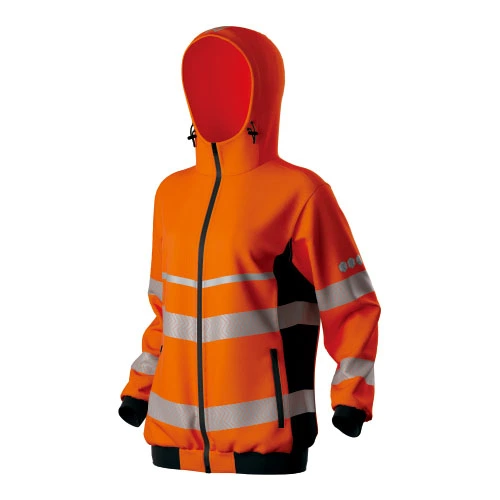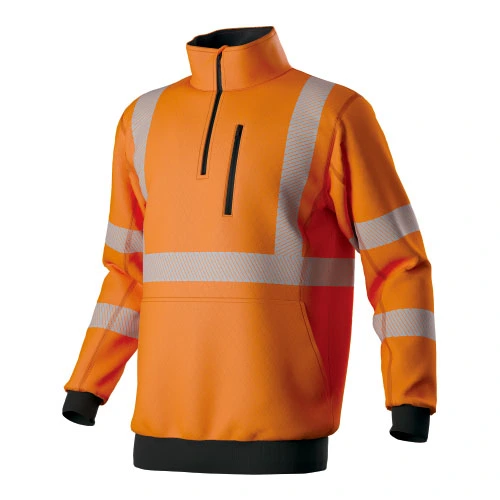
For industrial PPE programs, hi vis coveralls are generally better when consistent full-body coverage, contamination control, and simplified PPE issue are priorities. A separate hi-vis jacket and trousers system is often better when workers need greater layering flexibility, easier sizing, or lower replacement costs.
The right choice should therefore be based on workplace hazards and total lifecycle cost—not garment price alone.
From a procurement perspective, the biggest difference is how the garments are issued, maintained, and replaced.
| Factor | Hi-Vis Coveralls | Jacket & Trousers |
|---|---|---|
| Full-body coverage | Excellent | Depends on how garments are worn |
| PPE issue control | Simple—one garment | Two SKUs per worker |
| Size flexibility | More difficult | Easier to mix top/bottom sizes |
| Layering | Limited | More flexible |
| Replacement cost | Entire garment may need replacement | Replace damaged piece only |
| Branding consistency | Excellent | Excellent |
| Worker compliance | Fewer separate items | Requires correct combination |
For large industrial teams, reflective coveralls can simplify uniform management because workers receive one integrated garment with consistent fluorescent and reflective material placement.
Two-piece systems create more SKUs but allow procurement teams to replace only a worn jacket or damaged pair of trousers.
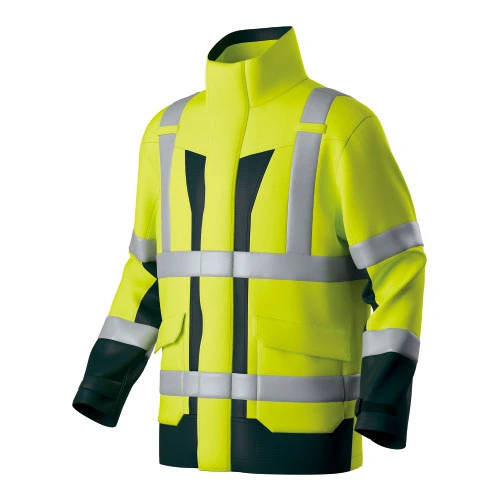
Coveralls are particularly effective for oil and gas, utilities, engineering, maintenance, mining, workshops, and industrial environments where workers frequently bend, climb, kneel, or work around equipment.
Because the upper and lower body are connected, there is less opportunity for the shirt or jacket to ride upward and expose the waist area.
This also helps maintain consistent positioning of high-visibility materials. ISO 20471 specifies requirements for fluorescent background material, retroreflection, minimum material areas, and placement. Garments covering the torso, arms, and legs can therefore provide extensive conspicuity when designed and certified correctly.
Coveralls are also useful where employers want:
Consistent head-to-ankle uniform appearance
Reduced garment separation during work
Fewer PPE items to issue and track
Large areas for corporate logos and worker identification
Better protection of personal clothing from dirt and light contamination
However, full-body coverage does not automatically mean better protection. The garment must still be selected according to the actual workplace risk assessment and applicable certification.
A two-piece system is often more economical where garments experience uneven wear.
For example, warehouse and transport workers may damage trousers more quickly than jackets. Maintenance technicians may experience greater sleeve and upper-body wear. With separate garments, the damaged component can be replaced without discarding the complete uniform.
Jackets and trousers also provide better temperature management. Workers can remove a jacket when permitted, add insulating layers in cold conditions, or change trouser and jacket sizes independently.
This is particularly valuable for large teams because body proportions vary significantly. A worker who requires an XL jacket may not require XL trousers.
For procurement teams managing hundreds or thousands of employees, this sizing flexibility can reduce alterations, incorrect issues, and unused inventory.
For higher-risk industries, garment style should be decided only after the required protective standards have been defined.
High visibility addresses conspicuity; it does not automatically provide flame, heat, arc, or electrostatic protection.
For example, ISO 11612:2015 specifies performance requirements for clothing intended to protect workers against heat and flame hazards. EN 1149-5:2018 addresses material and design requirements relating to electrostatic properties of protective clothing.
Where several hazards exist, buyers may require hi vis flame retardant overalls combining multiple performance requirements within one garment.
The purchasing specification should clearly identify:
High-visibility standard and required class
Flame and heat protection requirements
Anti-static requirements
Arc-flash requirements where applicable
Welding or molten-metal exposure where applicable
Required number of certified wash cycles
Reflective tape type and performance
Do not assume that adding reflective tape to an FR coverall automatically creates compliant high-visibility PPE. The complete garment design, materials, reflective configuration, and certification must support the required standard.
For the U.S. market, ANSI/ISEA 107-2020 remains the current ISEA-listed standard for high-visibility safety apparel and defines material, design, performance class, and application requirements.
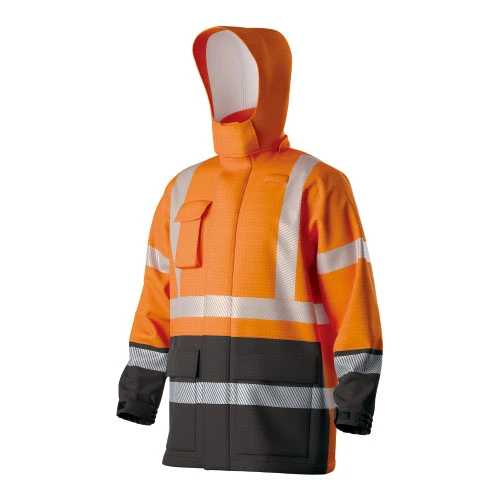
Fit becomes particularly important with coveralls because one garment must accommodate torso length, waist, hips, shoulders, arms, and legs.
Poorly specified hi vis coveralls may pull across the shoulders when workers reach overhead or restrict the crotch and knees during climbing and kneeling.
For industrial programs, useful construction details include:
Action-back or pleated shoulders: improves upper-body movement.
Elasticated or adjustable waist: accommodates more body shapes without excessive looseness.
Two-way front zipper: improves convenience for workers wearing the garment throughout long shifts.
Reinforced knees: valuable for maintenance, construction, and mechanical work.
Adjustable cuffs: helps control loose fabric around machinery.
Pocket layout should also reflect actual job roles. Cargo pockets may be important for technicians, while chest pockets may be required for radios, identification, or small tools.
More pockets are not always better. Excessively bulky pockets can interfere with harnesses, tool belts, and other PPE.
A professional OEM enquiry should contain considerably more information than color, quantity, and logo.
For accurate development and quotation, provide:
Required garment style: coverall or jacket/trousers
Target market and applicable PPE standards
High-visibility class or performance requirement
FR, anti-static, arc or other protective requirements
Fabric composition and target weight
Fluorescent color
Reflective tape specification and placement
Size range and size chart
Pocket configuration
Zipper, snap and closure requirements
Reinforcement areas
Logo method and positioning
Wash-performance requirement
Individual packaging and labeling
Quantity by size
Expected repeat-order volume
For OEM programs, it is also important to approve a pre-production sample before bulk manufacturing. Fit, reflective tape placement, pocket accessibility, logo position, fabric hand feel, and mobility should be checked on actual workers where possible.
Ultimately, choose reflective coveralls when integrated coverage and simplified PPE control are more important. Choose jackets and trousers when layering, mixed sizing, and component-level replacement deliver greater operational value.
Not automatically. Coveralls can provide more consistent full-body coverage, while a certified jacket-and-trouser ensemble can also achieve high levels of protection. Selection should follow the workplace risk assessment and relevant PPE standards.
The main advantages are integrated body coverage, consistent reflective positioning, simple uniform issuing, and reduced risk of workers separating required upper- and lower-body garments.
No. Flame resistance and high visibility address different hazards. Hi vis flame retardant overalls must be specifically designed and tested for the required flame/heat and visibility standards rather than assumed compliant because they use fluorescent fabric or reflective tape.
Potentially, yes. High-visibility performance depends on the certified garment or ensemble design, including visible fluorescent and retroreflective areas. ISO guidance recognizes that clothing ensembles can achieve higher visibility classifications when the combination satisfies the applicable requirements.
Coveralls can reduce SKU complexity and simplify issuing, while two-piece workwear can lower replacement costs because damaged jackets or trousers can be replaced separately. For large PPE programs, total annual cost per worker is therefore more useful than comparing initial unit prices alone.
 English
 日本語
日本語 français
 português
 Deutsch
 dansk
dansk Suomi
Suomi Español
 Nederland
 norsk
norsk